Leading Under the Clock: What the Gym Floor Teaches Us About Real Leadership
Leadership
By
August 4, 2026


If you want to know who someone really is, don't read their resume watch them at minute 14 of a 20-minute workout when their lungs are burning and the whiteboard says there are still 50 reps to go.
As a CrossFit coach, my classroom isn't a boardroom or a Zoom call. It's rubber matting, chalk dust, and heavy barbells. But every single day, the gym floor provides a masterclass in human behavior, resilience, and true leadership.
Here are four core leadership principles straight from the whiteboard to the workplace.
In CrossFit, we have an expression: “Modify the movement, don't lower the standard.”
On any given day, a 22-year-old competitive athlete might share a whiteboard with a 58-year-old grandfather recovering from knee surgery. The Workout of the Day (WOD) is the exact same in intent, but scaled in execution to meet each athlete at their current fitness level.
The Business Translation: Exceptional leaders don't demand a one-size-fits-all output from their team. They scale the challenge. They know who needs an extra heavy load to stay engaged and who needs a lighter stimulus and extra coaching to build confidence. True leadership isn't treating everyone identically it's giving everyone the exact level of support they need to hit their peak capacity.
A coach can give a flawless 3-minute whiteboard briefing before the clock starts. But if they stand in the corner staring at their phone while athletes struggle with poor form, that briefing meant nothing. Trust is built in the middle of the noise when you step in, correct a dangerous spinal position, offer a quick word of encouragement, or cheer on the person who is dead last.
Leadership works the exact same way. Strategy presentations are fine, but credibility is earned when leaders roll up their sleeves, offer real-time feedback, and support their people when the work gets chaotic.
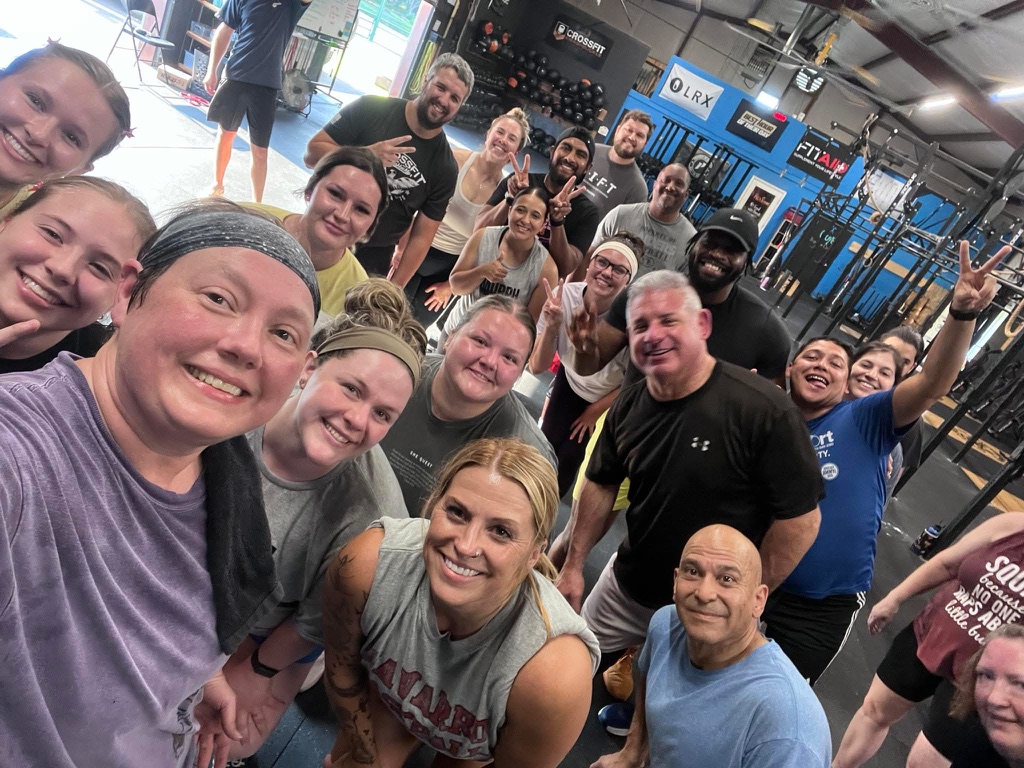
When the first athlete finishes a grueling workout, they don't immediately pack up their gear and walk out. They catch their breath, walk over to the athlete still struggling, and cheer them through their final reps.
The gym culture isn't judged by how fast the fastest person is it's judged by how the community treats the person struggling at the back.
   High-Performing Team Culture

   "No one cleans up their gear until everyone finishes."
In any company, true team culture shows up when top performers lift up those who are struggling. If your leadership style creates a ruthless hyper-individualistic environment, you might hit short-term targets, but you'll lose the locker room in the long run.
As coaches, we preach a strict hierarchy: Mechanics > Consistency > Intensity.
When leaders push for high intensity (speed, revenue, tight deadlines) without first establishing solid mechanics (processes, clarity, role alignment) and consistency, burnout and breakdown are inevitable.
Leadership isn't a title you wear; it's a practice you bring to the floor every day. Whether you're holding a clipboard or running a company, your job is simple: set the standard, build the culture, and help your people lift more than they thought possible.