Strong But Can’t Run? Fast But Can’t Lift? How to Balance Your Weaknesses as a Hybrid Athlete
The Hybrid Athlete
By
July 13, 2026
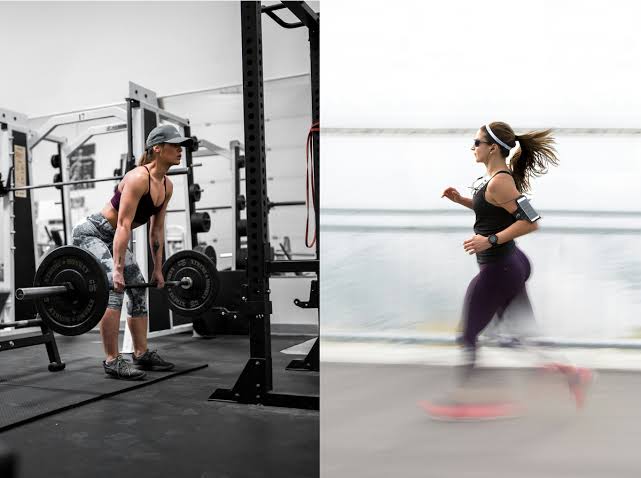

We’ve all seen it in the gym and honestly, most of us are it.
On one side, you have the lifter who can back squat a house but breathes heavily just walking up the stairs to the mezzanine. On the other side, you have the engine runner who can cruise through a 10k without breaking a sweat, but a 135-pound barbell looks like an absolute monument.
When you commit to the hybrid athlete lifestyle training for both elite strength and a massive engine you quickly realize something humbling: Your ego is going to take a hit.
It is incredibly easy to spend all your time doing what you’re already good at. If you’re strong, you want to lift heavy things. If you have deep lungs, you want to run. But true hybrid fitness means confronting the gaps.
Here is how to shift your mindset, audit your training, and build up your weaknesses without losing the strengths you worked so hard to build.
Let’s be real nobody likes being bad at things. Walking into a class knowing you’re going to be the last one back from the run loop or struggling with a weight that others use for warm-ups is uncomfortable.
Because of this, many athletes fall into the trap of accidental bias. They look at a week of workouts, cherry-pick the ones that play to their strengths, and find a convenient excuse to skip the ones that target their weaknesses.
The Hybrid Rule: You don't have to love your weaknesses, but you do have to respect them. If you ignore your gaps, they will eventually become a ceiling that stops your overall fitness from progressing.
You cannot chase peak strength and peak endurance at the exact same intensity at the exact same time. If you try to add 50 pounds to your deadlift while simultaneously cutting 4 minutes off your 5k time in a single month, you’re on a fast track to central nervous system burnout (or injury).
Instead, think of your year in blocks of emphasis:
If your legs ache just thinking about a row or a run, the solution isn’t to go out and sprint until you throw up. That just builds resentment (and bad habits).
If you can run for miles but feel unstable under a heavy barbell, your focus needs to shift toward mechanics and structural integrity.
Being a hybrid athlete doesn't mean you have to be a world-record powerlifter and an Olympic marathoner. It means you are building a body that is durable, versatile, and ready for whatever challenge is thrown at it.
Next time you look at the whiteboard and see a workout that makes you wince whether it's a heavy structural lifting day or a long, sweaty grinder don't skip it. Look at it as the exact tool you need to build a more balanced, bulletproof version of yourself.